Notes from Jacquie: The Rise of Phone Reading by Jennifer Maloney offers authors and readers a view of current trends. The Rise of Phone Reading a Wall Street Journal Article.

Sunday, August 16, 2015


Sunday, August 2, 2015
Teaching Cursive The Easy Way
 |
| From Psychology Today |
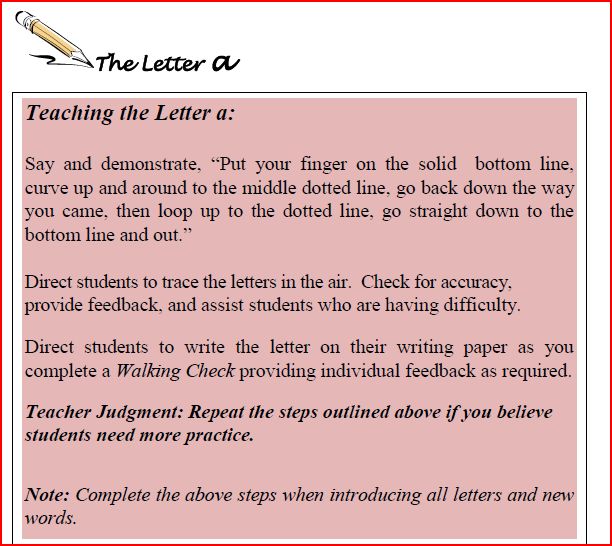
This approach to teaching cursive has been used successfully in elementary, secondary, and special education classes. a, e, i, o, and u are included in this post. Those interested in the entire alphabet may receive a free copy at Jacquie's Lessons.
Cursive and Cognitive Development
It has been known for years that cursive is an excellent memory tool. Current research continues to support this belief. The following article regarding cursive being an important tool for cognitive development is one, among many: Psychology Today: Benefits of Cursive
Cursive in the Workforce
The critical need for students to have cursive in their knowledge toolbox became more than obvious to this author when I was working with Special Education Transition to the Workforce programs. Employer feedback was clear: students could not read notes when they were written in cursive. We did, of course, ask employers to print notes. The realization that we would not be available to support students after graduating from the program led to the addition of cursive to the curriculum.Whether working with one student or a class of 35, teaching cursive can be fun.
Preparation
Draw two sets of solid, parallel lines about five feet long on the boardapproximately 24 inches apart. Draw a dotted line midway between the
solid lines (approximately twelve (12) inches above the bottom lines).
Supply Students with lined writing paper. Handwriting paper templates available at Jacquie's Lessons

Note: Use this line formation for all letter and word demonstrations for as long
as required. When the students understand the concept of the dotted line
and can write correctly on their papers, the use of lined paper can be eliminated.


Resources:
Cursive Wall Strips Leap Frog Cursive Dry Erase Zaner Blosser Wall Chart
Cursive Practice: Jokes & Riddles Wacky Sentences Handwriting Workbook
Cursive Handwriting for Teens
Cursive Practice: Jokes & Riddles Wacky Sentences Handwriting Workbook
Cursive Handwriting for Teens
Tuesday, July 28, 2015
Process, Content & Feeling: A Powerful Mix
Process, Content, and Feeling: A Powerful Mix
Note from Jacquie:
This bare bones matrix was used as a tool for decision-making in my Curriculum and Methods class. We worked as a group to design classroom environments for each teacher enrolled in the class. It is a working document with no one correct solution and is intended to be used as a tool for thoughtful consideration.
There are a wealth of resources available to assist those who home school, teachers and tutors in decision-making. A few are listed below. There is a growing contemplation of resources listed on this blog. As always, your comments and ideas are very welcome.

• Process Defines the Method of Teaching.
Group instruction, often a favorite, is most often successful when students are learning the same standard. To require a student to sit through instruction of material he or she has mastered OR material that is far too difficult, not only defeats the purpose of instruction but causes students to lose interest. The opportunity to learn may be unintentionally eliminated with the selection of ta particular lesson process.precision teaching, multi-sensory learning, scaffolding, and cooperative learning are examples of additional structures available. Each strategy can work with any curriculum. A list of process options to consider can be found at the end of this post. Other resources can be found listed on this blog.
• Content Defines What is Taught.

It is important to sequence each lesson in such a way that students are exposed to both previously learned material and the new content simultaneously. Each student should have his or her own entry point into the curriculum and move at his or her own pace in order to offer a frustration free experience.• Feeling is Perhaps the Most Important Component of each Lesson.
While the reactions to the learning environment may vary among students, it is important for the instructor to be aware of the feeling tone of the class. Adjusting the content, presentation, adding humor, or additional positive reinforcement goes a long way toward maintaining a warm, inviting environment.• Feelings are attached to every learning event and have a direct impact on the assimilation and retention of information. For example, if a teacher yells or belittles students when teaching the digraph th, chances are the student will not remember the digraph th, but will remember the teacher. The student may be less receptive to further teaching of the digraph th and, depending on the degree of the negative impact, reading in general.

Excerpt from Rhoades to Reading Copyright information above
Thank you Cindy Kreeger for editing this article.
Resources:
Amazon: Explicit Instruction: Effective & Efficient Teaching
Amazon: Top 100 Social Rules Kids Need
Amazon: Scaffolding Children's Learning
Amazon: Top 100 Social Rules Kids Need
Amazon: Scaffolding Children's Learning
Thursday, July 2, 2015
Spotlight on Justice: A Lesson in Ambiguity
 Spotlight on Justice: A lesson in Ambiguity

The purpose of this lesson is to explore the ambiguity surrounding justice, and encourage each student to develop a broad personal understanding of the concept.
Various perceptions of justice abound, when these differing perceptions meet conflict may occur.
Various perceptions of justice abound, when these differing perceptions meet conflict may occur.
The objectives of this lesson:

Subscribe to:
Posts (Atom)